“Central and South America” search results (700)

Coffee Basics Where is the coffee belt distributed
Coffee production occurs mostly between Tropic of Cancer, 25 degrees north of the equator and 30 degrees south of the equator in tropical or subtropical regions. Areas with an annual average temperature of 16-25 degrees Celsius, frost-free and rainfall of 1600-2000 mm. At present, there are more than 70 major coffee producing countries. The largest one is located at an altitude of 300-400 meters, and sometimes at an altitude of 2000-2500 meters.
2014-11-21 Coffee knowledge Coffee basics Coffee belt
The mysterious Coffee Belt of the basic knowledge of Coffee
Coffee beans grow in tropical or subtropical agricultural gardens around the equator, called coffee belts, and travel to Japan with ships. When the brown coffee beans appear in front of your eyes, they have actually gone through a variety of different circulation processes and the hands of many people. Coffee is widely distributed in South America, Central America, the West Indies, Asia, Africa, Arabia, the South Pacific and
2014-11-08 Coffee knowledge coffee basics coffee belt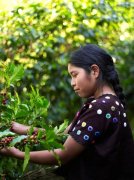
Guava Plain Manor, New Oriental region of Guatemala, Central and South American Coffee
Guatemala is one of the most important coffee producing countries in Central America, with long mountains and different regional climates, thus creating eight major coffee producing areas in Guatemala, all located on the highland topography of the subtropical climate, with abundant and stable rainfall and fertile volcanic ash soil is an excellent environment for coffee trees to grow. Plan del Guayabo is located next to the Volcn de Suchitn volcano.
2016-05-30 Guatemala New Oriental producing areas Guava Plains Manors Central and South America Coffee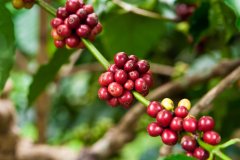
Guava Plain Manor, New Oriental region of Guatemala, Central and South American Coffee
Guatemala is one of the most important coffee producing countries in Central America, with long mountains and different regional climates, thus creating eight major coffee producing areas in Guatemala, all located on the highland topography of the subtropical climate, with abundant and stable rainfall and fertile volcanic ash soil is an excellent environment for coffee trees to grow. Plan del Guayabo is located next to the Volcn de Suchitn volcano.
2016-05-23 Guatemala New Oriental producing areas Guava Plains Manors Central and South America Coffee
Panamanian Jadeite Manor Coffee Flavor description treatment method taste variety characteristics manor introduction
Central America is a long isthmus from northern Mexico to southern Colombia, connecting North and South America. Panama is located in the southernmost part of Central America, so the country runs from east to west, not from north to south as people think. This means that the coast of the Caribbean (Atlantic) is in its north, while the Pacific is in the south. So far, Panama also shares the Atlantic Ocean.
2016-10-07 Characteristics aroma Panama jade manor coffee flavor description processing taste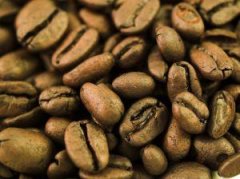
Where is the basic knowledge of boutique coffee?
Coffee trees grow in tropical or subtropical agricultural gardens centered around the equator and called coffee belts. Most of the coffee production is between the Tropic of Cancer, 25 degrees north of the tropical or subtropical equator and 30 degrees south of the equator. An area with an annual average temperature of 16-25 degrees Celsius, no Frosts Descent and rainfall of 1600-2000 mm. At present, coffee is mainly produced by seven countries.
2015-03-04 Boutique coffee basic knowledge where tree grow equator center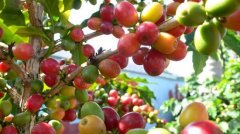
The terrain of Guatemala is delicious. How does Guatemala coffee come from?
The Republic of Guatemala is a presidential republic in Central America, located in the southern part of the North American continent. West Pacific Ocean, east Caribbean Sea, north and Mexico, northeast Belize, southeast Honduras and El Salvador, the total area of 108889 square kilometers. Two thirds of the territory of Guatemala consists of mountains and plateaus. To the west are the Cuchumatanes Mountains.
2016-05-07 Guatemala Topography Delicious Coffee How Republic Central America
Coffee common sense what is a coffee belt (COFFEE WORLD MAP)
Coffee trees grow in tropical or subtropical agricultural gardens centered around the equator and called coffee belts. Most of the coffee production is between the Tropic of Cancer, 25 degrees north of the tropical or subtropical equator and 30 degrees south of the equator. An area with an annual average temperature of 16-25 degrees Celsius, no Frosts Descent and rainfall of 1600-2000 mm. At present, coffee is mainly produced by seven countries.
2014-11-11 Coffee knowledge coffee common sense coffee belt
Introduction to the Nicaraguan Lemon Tree Manor located in Central America
Nicaragua, located in the middle of Central America, is the largest country in China and the United States, bordering Honduras in the north, Costa Rica in the south, the Caribbean Sea in the east and the Pacific Ocean in the west. The eastern part is the coastal plain, the high temperature and rainy climate belongs to the tropical maritime climate, and the western part is the coastal lowland with more active volcanoes. The north-central part is a highland, with an average annual temperature of 18 ℃ and an annual precipitation of 1500-2500mm.
2016-07-18 Located in Central America Central America Nicaragua Lemon Tree Manor introduction
Basic knowledge of boutique coffee definition of coffee belt
Most of the coffee production is between the Tropic of Cancer, 25 degrees north of the tropical or subtropical equator and 30 degrees south of the equator. An area with an annual average temperature of 16-25 degrees Celsius, no Frosts Descent and rainfall of 1600-2000 mm. At present, coffee is mainly produced in more than 70 countries. The Big self is located at an altitude of 300,400m, sometimes between 2000 and 2500 meters above sea level.
2014-12-30 Boutique Coffee Basics definition place of production most Equator Beihui
Lively fragrant coffee flavor description of Incht Manor in Guatemala
Located in the northern part of Central America, bordering Mexico, Belize, Honduras and El Salvador. It is bordered by the Pacific Ocean to the south and the Gulf of Honduras in the Caribbean Sea to the east, bordering Mexico, El Salvador, Honduras and Belize on land. 2/3 of the territory consists of mountains and plateaus. There are Kuchu Matanes Mountains in the west, Madre Mountains in the south, and volcanic belts in the west and south.
2016-10-07 Lively fragrant Guatemala Hutt Manor Coffee Flavor description processing mouth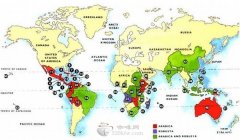
Coffee belt coffee trees grow at the center of the equator
Coffee trees grow in tropical or subtropical agricultural gardens centered around the equator and called coffee belts. Most of the coffee production is between the Tropic of Cancer, 25 degrees north of the tropical or subtropical equator and 30 degrees south of the equator. An area with an annual average temperature of 16-25 degrees Celsius, no Frosts Descent and rainfall of 1600-2000 mm. At present, coffee is mainly produced by seven countries.
2014-09-13 Coffee knowledge coffee belt coffee tree growth
Bright taste of Panamanian Ireta Manor Coffee Flavor characteristics Fine Coffee introduction
Central America is a long isthmus from northern Mexico to southern Colombia, connecting North and South America. Panama is located in the southernmost part of Central America, so the country runs from east to west, not from north to south as people think. This means that the coast of the Caribbean (Atlantic) is in its north, while the Pacific is in the south. So far, Panama also shares the Atlantic Ocean.
2016-08-30 Bright palate Bana May Leeta Manor Coffee Flavor characteristics Fine goods
Boutique Coffee Science detailed explanation of Coffee Belt (COFFEE WORLD MAP)
Coffee trees grow in tropical or subtropical agricultural gardens centered around the equator and called coffee belts. Most of the coffee production is between the Tropic of Cancer, 25 degrees north of the tropical or subtropical equator and 30 degrees south of the equator. An area with an annual average temperature of 16-25 degrees Celsius, no Frosts Descent and rainfall of 1600-2000 mm. At present, coffee is mainly produced by seven countries.
2014-10-18 Coffee knowledge boutique coffee science coffee belt
Introduction to the characteristics of Panamanian Kasha Coffee with Special Sweet and Vanilla Flavor
Panama is located in the isthmus of Panama in Central America, bordered by Colombia to the east, the Pacific Ocean to the south, the map of Panama to Costa Rica to the west and the Caribbean Sea to the north. The territory is S-shaped to connect North and South America, and the Panama Canal connects the Atlantic and Pacific oceans from north to south. It is known as the bridge of the world. [5] Panama has a land area of 75517 square kilometers.
2016-08-29 Special sweet vanilla Bana Marka coffee flavor taste manor producing area
Coffee Belt (COFFEE WORLD MAP) Coffee trees grow around the equator
Coffee trees grow in tropical or subtropical agricultural gardens centered around the equator and called coffee belts. Most of the coffee production is between the Tropic of Cancer, 25 degrees north of the tropical or subtropical equator and 30 degrees south of the equator. An area with an annual average temperature of 16-25 degrees Celsius, no Frosts Descent and rainfall of 1600-2000 mm. At present, coffee is mainly produced by seven countries.
2015-09-12 Coffee COFFEE WORLD MAP tree longer than equator for
American Coffee Culture Coffee History: Deckley and His Royal Coffee Seedling
Central and South America is now the world's most important coffee-producing area, where more than half of the coffee beans consumed worldwide come from. When it comes to the ancestors of coffee in Central and South America, one cannot fail to mention Martinique, an island, and Gabriel Mathieu de Clieu, a soldier. In 1723, he returned home.
2016-04-06 China Coffee America Coffee Culture History Fun Talk Klee His Royal Medium
Bolivian Coffee characteristics Manor Flavor and taste introduce Bolivian Coffee Brand
The seat of the government and parliament, the largest city and political, economic and cultural center in the country, with a population of 2.7416 million. The city center, which is 3660 meters above sea level, is the highest seat of government in the world. La Paz was founded in 1548 and means the city of peace in Spanish. [6] the legal capital of Sucre, the seat of the Supreme Court, population 284000, 2790 meters above sea level. Founded in 1538, the city was formerly known as Chuquisaka. one
2016-08-12 Bolivia coffee characteristics manor producing area flavor taste introduction brand politics
A little knowledge of coffee the geographical location of the coffee belt
Most of the coffee production is between the Tropic of Cancer, 25 degrees north of the tropical or subtropical equator and 30 degrees south of the equator. An area with an annual average temperature of 16-25 degrees Celsius, no Frosts Descent and rainfall of 1600-2000 mm. At present, coffee is mainly produced in more than 70 countries. The Big self is located at an altitude of 300,400m, sometimes between 2000 and 2500 meters above sea level.
2014-10-08 Coffee knowledge coffee belt coffee tree planting
Peruvian organic coffee beans, a major coffee producer in western South America
Coffee origin: Peru (Peru) is also a major coffee producer. Up to 98% of Peruvian coffee is grown in forest areas, and most producers are small farmers. Peru has good economic conditions and a stable political situation, thus ensuring the good quality of coffee. However, there are many local problems, in addition to guerrilla warfare and drug trafficking, in the mid-1990s in the coastal areas
2014-09-18 Peruvian organic coffee beans South American coffee beans organic coffee beans